Serviced Offices vs Traditional Leases: What’s the Difference?
In today's business environment, flexibility, speed of launch, and efficient resource utilization have become key factors for success. That is why more and more companies are turning their attention to new office formats, in particular, serviced offices Malta. But how do they differ from traditional rentals? And which option is best for your business?
What is a serviced office?
A serviced office is a fully furnished and equipped working environment that a company can rent for a short or long term. The cost usually includes utilities, internet, cleaning, reception, access to meeting rooms, and other amenities.
It is a ‘turnkey office’ ready for immediate use upon signing the contract.
What does traditional office rental entail?
Traditional rental is a contract, usually concluded for several years, which provides the company with ‘clean’ premises. The tenant independently manages the space: furnishes it, connects the internet, concludes contracts with service providers, etc.
This format is suitable for companies looking for a permanent place to work with full control over the design and infrastructure.
Key differences between serviced offices and traditional leases
Ready to work
Serviced offices are ready to use immediately after signing the contract. All you need to do is show up and start working. This includes furniture, equipment, internet, and other necessary services. Traditional rentals, on the other hand, require more time to set up an office: you will have to purchase furniture and equipment yourself, organise internet connection and other utilities.
Lease term
Serviced offices are typically available for shorter durations, ranging from just a few days to several months. This flexibility allows businesses to choose a lease term that best suits their current needs. In contrast, traditional leases generally require a commitment of 1 to 5 years, which can be less ideal for start-ups or short-term projects that require more flexibility.
Flexibility
Serviced offices offer much greater flexibility. You can quickly change the number of workstations or even the size of the office, depending on changes in your business. Traditional office leases do not usually allow for such changes. If you decide to expand your office or reduce its size, you may have to terminate your contract or carry out major renovations.
Initial investment
Serviced offices require minimal initial investment, as all necessary resources are already included in the rental price: furniture, internet, utilities, etc. You get a ‘turnkey office.’ With a traditional lease, you will have to invest significantly in furnishing the space, renovations, purchasing furniture and equipment, and signing contracts with service providers, which can be expensive and time-consuming.
Space management
In serviced offices, the landlord takes on most of the administrative responsibilities, such as cleaning, organising reception work, and providing all the necessary services. Traditional leases require the tenant to handle all matters related to office management, repairs, and utilities, which can be burdensome for companies that do not want to spend time and resources on such tasks.
Additional services
Serviced offices typically include additional services such as reception, cleaning, access to meeting rooms, telephone lines, continuous internet, and other infrastructure services. In traditional rentals, these services are not part of the standard lease, and you will have to arrange and pay for them separately.
Who are serviced offices suitable for?
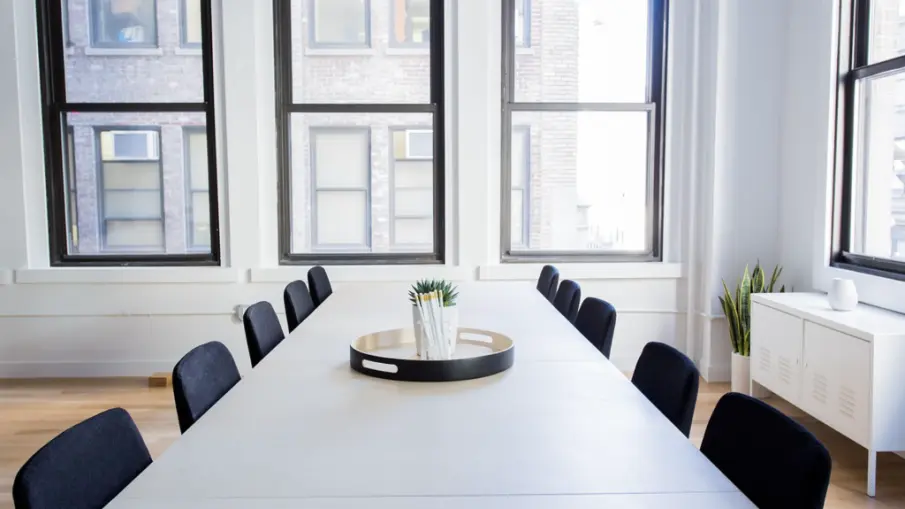
This format is particularly convenient for:
- start-ups and newly established companies;
- representative offices of international brands;
- freelancers and small teams;
- companies that need a temporary office;
- businesses that are actively growing and changing scale.
When should you choose traditional leasing?
Traditional leasing may be the best option for:
- stable companies with a large staff;
- organisations that want complete control over their space;
- businesses with specific infrastructure requirements;
- companies that plan to stay in one place for a long time.
Conclusion
When choosing between a serviced office and traditional leasing, it is important to consider the size of the company, its stage of development, budget, and need for flexibility. Serviced offices are a modern solution that allows you to quickly launch your workflow without unnecessary costs and commitments. At the same time, traditional leasing can provide more control and stability for mature companies with a clear strategy.
In order to make it easier to decide which office is right for you, you can refer to the article "What You Need to Know Before Renting an Office Space in Sliema".
More to Read:












Previous Posts: